
A missing woman. A haunted hotel. A Grand Séance poised to tear open the veil between worlds.
From the start, The Séance of Blake Manor set out to deliver something delicate: a first-person narrative detective adventure where observation, timing, and deduction are everything. Players step into the shoes of private investigator Declan Ward, explore the haunted corridors of Blake Manor, interrogate a cast of mystics and suspicious residents, and piece together clues, motives, and contradictions before Halloween night is over.
For Spooky Doorway, the team behind The Séance of Blake Manor, playtesting didn’t just help catch bugs—it helped the game reach its full potential after release, contributing to an impressive 89 on Metacritic and a 95% Overwhelmingly Positive rating on Steam after 4 months of release.
"For a game like this, success depends on more than atmosphere or art direction. It depends on whether players can follow the mystery, trust the journal system, read character schedules, and ultimately feel that the truth was discoverable. That is where end-to-end external playtesting became invaluable."
Dimitrije Dokic, Publishing Producer - Raw Fury

Background and Objectives
Developed over 2 years and 10 months by Spooky Doorway (a team of roughly 16–18 people, not all full-time), and published by Raw Fury, The Séance of Blake Manor was a tightly scoped but highly ambitious project.
Its blend of Victorian spiritualism, Irish folklore, time-sensitive progression, and detective logic meant that every system had to work in harmony.
Internally, the team already understood Blake Manor intimately. They knew where clues were hidden, how the suspects moved through the house, and what the endgame was building toward. But that familiarity created a risk common in mystery-driven design: when developers know too much, it becomes harder to judge whether a new player has enough information to build their own case.
That is why the studio and publisher turned to external playtesting of the entire game.
For a game in which every action advances the clock and every missed conversation can alter the investigation, those weren’t minor questions. They were central to whether the mystery would land at all.
The learning objectives were clear:
- Was the experience engaging and fun?
- Was the story coherent?
- Where were players getting lost?
- Did they have enough time and information to figure things out?
- Critically, how did these results vary across demographics?
Challenges Encountered
The biggest challenge wasn’t resisting feedback—it was seeing the game clearly.
According to the team, no feedback was especially hard to take. Instead, the real difficulty was structural: deduction games are notoriously hard to evaluate from the inside. When a studio already knows who the culprit is, how the entity quest resolves, or when a key encounter should occur in the manor, it becomes much easier to overlook friction that real players will feel immediately.
That challenge was intensified by The Séance of Blake Manor’s design.
Characters follow their own schedules. Important events happen at specific times. Players must interrogate suspects, explore hidden spaces, record clues in their journal, and interpret contradictions without feeling either spoon-fed or unfairly misled.
In other words, the game had to maintain mystery without sacrificing coherence.
What issues did the team discover during playtesting?
- Timetable data was out of sync
- Guidance needed refinement
- Crucial moments, especially around the culprit reveal, weren’t landing as cleanly as intended
External players, coming to Blake Manor with fresh eyes, exposed those blind spots quickly.
The Playtesting Process
The studio’s external playtesting approach focused on the complete player journey, not isolated slices.
That mattered because The Séance of Blake Manor is built on accumulation: clues only gain meaning over time, suspicion grows through repeated interviews, and the final deductions depend on how players have interpreted the manor’s rhythms from beginning to end.
Using Go Testify, the team was able to watch players experience the mystery in their own homes, away from the artificiality of a lab/studio setting. The videos and supporting tools made it far easier to parse a large volume of feedback from a lengthy game at a critical stage of development.
Just as important was what happened after the sessions. The team could revisit footage whenever a design decision resurfaced and communicate with players between sessions to clarify intent or investigate a recurring issue more deeply.
For a game full of hidden motives, branching interpretations, and time-sensitive sequences, that ability to return to the evidence was invaluable.
Much like Declan Ward reviewing his journal, the developers weren’t relying on instinct alone, they could go back, observe, compare, and make stronger decisions.
Key Insights from Playtesting
The most important insight from playtesting was not that players loved solving the mystery; it was understanding what allowed them to solve it with satisfaction.
Three themes stood out above all: UX, guidance, and time balance.
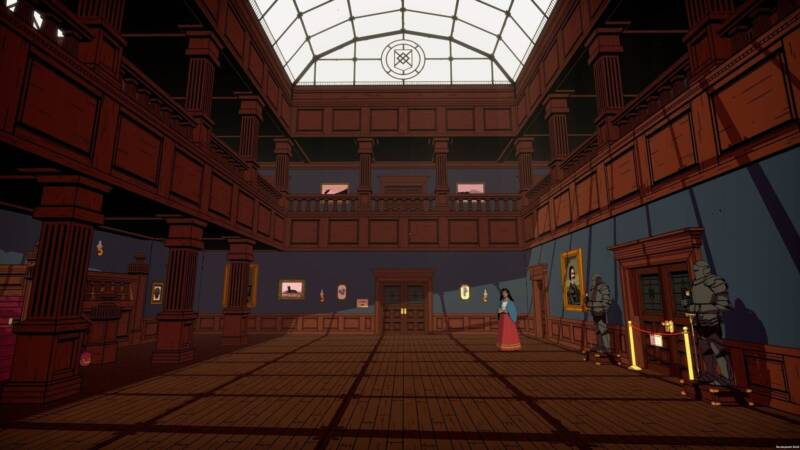
- [1] Players needed the journal system, clue flow, and navigation through Blake Manor to feel readable.
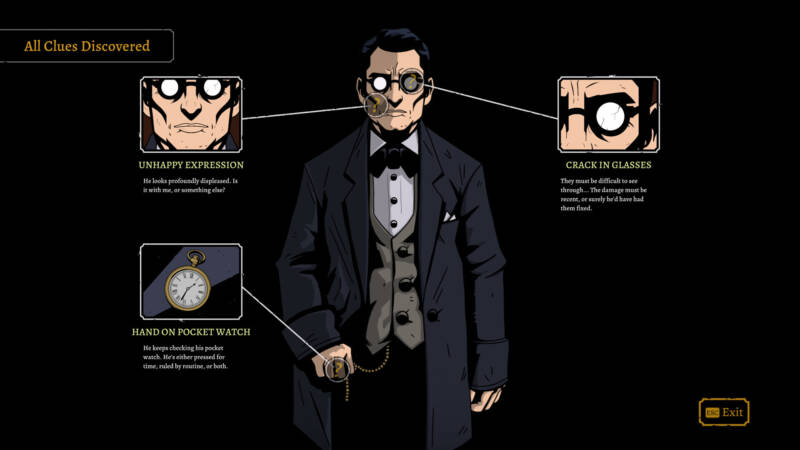
- [2] Players needed enough information to form theories about Evelyn Deane’s disappearance, the Grand Séance, and the manor’s wider secrets without feeling overwhelmed.
- [3] Players needed enough time to pursue leads before the clock advanced and opportunities vanished.
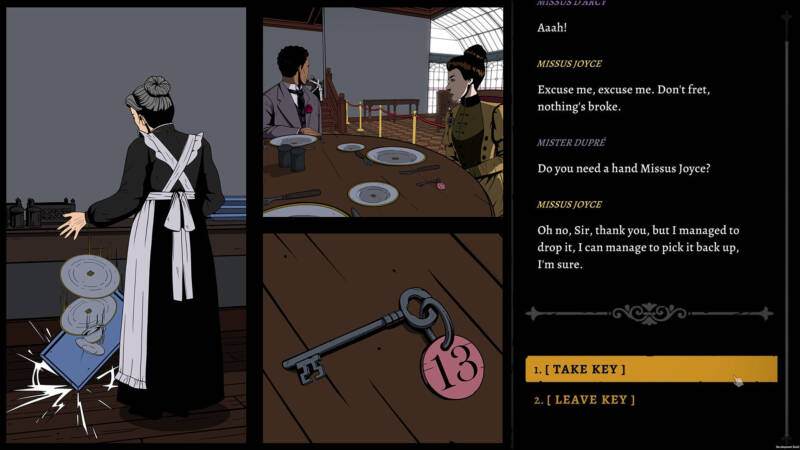
That balance is delicate in any detective game, but especially in one where character schedules matter. If a suspect is too difficult to track, if an interaction is too easy to miss, or if the information arrives in the wrong order, the mystery stops feeling elegant and starts feeling opaque.
At the same time, the team found joy in what was working.
"Watching players react to the endgame, and hearing the different theories they developed along the way, was a clear sign that the supernatural mystery was doing its job. The goal was never to eliminate uncertainty. It was to make uncertainty feel thrilling rather than frustrating.
Paul Conway, CEO/Art Director - Spooky Doorway
Resulting Changes and Impact
The playtesting feedback led directly to meaningful changes across the experience, and balance was a major focus.
- The team adjusted quest timing and progression to better support how players explored the manor and pieced together evidence.
- Added a specific cutscene at the end of the entity quest to ensure coherence.
- The save/load UI was improved.
- The Timetable data, which had slipped out of sync and gone unnoticed internally, was corrected.
- Streamlined parts of the library experience, ensuring that crucial information was discoverable without undermining the satisfaction of deduction.
- And perhaps most importantly, the path to identifying the culprit was refined because early playthroughs revealed too much confusion and dissatisfaction.
These were not cosmetic changes.
They struck at the heart of what makes The Séance of Blake Manor work: the feeling that players can genuinely uncover the truth through careful observation and reasoning.
The impact was clear after release. The game launched to an 89 on Metacritic, and four months later, it was still holding a 95% Overwhelmingly Positive rating on Steam. That kind of sustained response suggests more than a strong first impression—it shows a game that met players where it needed to, while preserving the mystery and tension that made it special.

Conclusion
[a] End-to-end playtesting helped the team test whether players could truly navigate Blake Manor’s haunted corridors with confidence, interpret suspects’ routines, build a case from clues and contradictions, and reach the endgame feeling challenged rather than shut out.
[b] It sharpened the UX, improved guidance, corrected timing, and protected the fairness at the center of the investigation.
[c] Just as importantly, it gave the studio something every detective game desperately needs: new eyes.
That fresh perspective helped transform a compelling supernatural mystery into a polished release that resonated with players and critics alike. And the work hasn’t stopped—the team is still making improvements based on player feedback today.
Key Takeaway
In a genre where one missed clue can unravel the entire experience, The Séance of Blake Manor shows what effective end-to-end playtesting can achieve: not just a better launch, but a game that continues to prove, long after release, that it reached its potential